
As Elon Musk's SpaceX finalizes its June 12 Nasdaq IPO timeline with a target valuation of $1.75-$2 trillion, retail investors worldwide are scrambling for ways to participate in the largest public offering in history. Direct IPO access requires account minimums of $250,000 or more and offers extremely low allocation rates. In this landscape, the publicly traded closed-end fund Destiny Tech100 (NYSE: DXYZ) has emerged as one of the market's hottest plays thanks to its SpaceX holdings, surging 11.3% on May 18 alone and posting a 44% year-to-date gain.
DXYZ: A Retail-Friendly Venture Capital Gateway
DXYZ ETF constituents
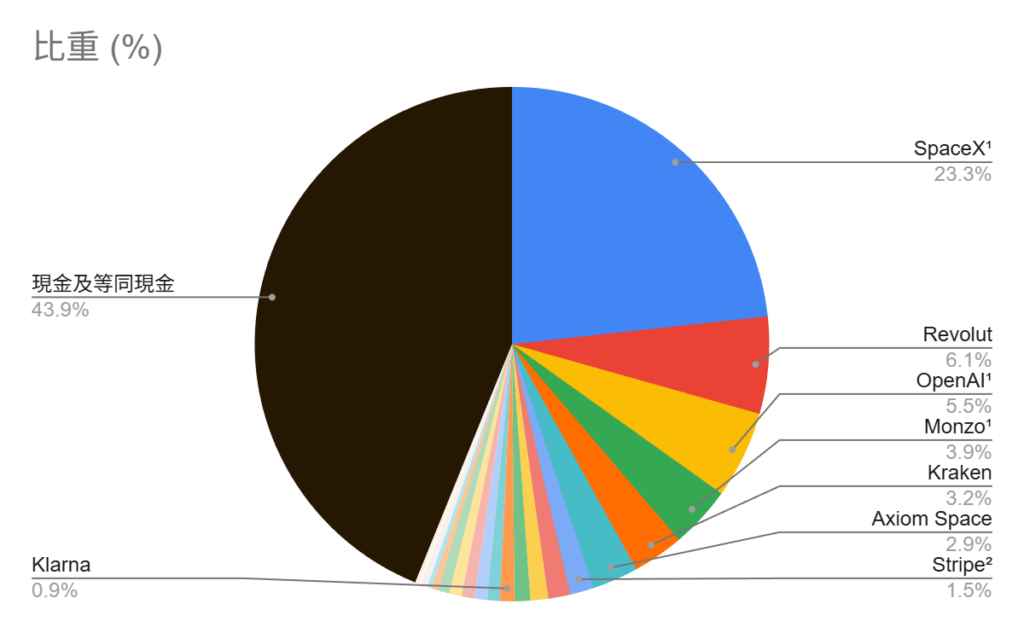

Launched in 2020 and listed on the NYSE in March 2024, DXYZ's core mission is to break down the barriers to investing in top-tier private market unicorns for ordinary investors. Traditional private equity requires millions of dollars in minimum commitments, but DXYZ allows anyone with a standard brokerage account to indirectly own stakes in 23 unlisted tech giants including SpaceX, OpenAI, Anthropic, and Stripe for just a few hundred dollars.
As of the first quarter of 2026, SpaceX is DXYZ's largest holding at approximately 16.2%, making it one of the highest-exposure retail funds to SpaceX available on public markets today. The fund also allocates over 30% of its portfolio to AI assets including OpenAI (3.8%), Anthropic, and xAI, creating a dual "aerospace + AI" thematic alignment that perfectly matches the two hottest investment trends of the current market cycle.
Three Critical Risks Investors Cannot Ignore
However, beneath this seemingly perfect investment vehicle lie significant risks that most retail investors overlook.
First and foremost is its staggering premium to net asset value. As of May 18, 2026, DXYZ closed at $53 per share, while its most recently published net asset value (NAV) stood at just $19.97 per share (as of December 31, 2025), representing a 165% premium. On May 11, fueled by SpaceX IPO rumors, DXYZ spiked as high as $71.24, pushing its premium to over 250%—meaning investors were paying roughly $1 for every $0.28 worth of underlying assets. Historically, DXYZ has experienced brutal premium collapses: after surging 818% following its 2024 listing, it crashed 80% in just two months, wiping out countless retail investors who bought at the peak.
Second is its industry-leading fee structure. DXYZ charges a 2.5% annual base management fee, and when combined with operating, legal, marketing, and investment-related expenses, its total annual expense ratio reaches 5-6%. For comparison, broad-market ETFs typically charge 0.03%-0.2% annually, and even actively managed thematic ETFs rarely exceed 1%. This means investors lose more than 5% of their principal each year to fees even if the underlying assets remain flat, a drag that will severely erode returns over the long term.
Finally, there is extreme volatility and limited holding transparency. DXYZ's price is driven almost entirely by market sentiment rather than underlying asset values. It surged 30.48% in a single day on May 11 only to plummet 25.04% the next day—a roller-coaster price action that tests the psychological limits of most retail investors. Additionally, some holdings are held through Special Purpose Vehicles (SPVs) rather than direct equity ownership, creating potential legal and tax risks in the event of liquidity events.
Better Alternative Options
For investors specifically seeking SpaceX exposure, DXYZ is far from the only game in town. EchoStar (SATS) holds approximately 3% of SpaceX, a stake worth over $50 billion at IPO valuations—already exceeding EchoStar's own market capitalization—and trades near its net asset value with no premium risk. Alphabet (GOOGL), an early investor, holds about 5% of SpaceX while also boasting a robust core business and reasonable valuation. Additionally, the Baron First Principles ETF (RONB) and Scottish Mortgage Investment Trust (SMT) hold 14.9% and 15.1% in SpaceX respectively, with significantly lower expense ratios than DXYZ.
Conclusion
DXYZ is fundamentally a high-leverage speculative instrument, not a traditional investment fund. If SpaceX exceeds valuation expectations after going public, DXYZ could see another explosive rally. However, once the IPO hype fades, its premium could contract rapidly, leaving investors with massive losses even if the value of the underlying assets remains unchanged.
For highly risk-tolerant short-term traders who can withstand drawdowns of 50% or more, DXYZ may be a tool to trade the SpaceX IPO sentiment. But for long-term investors seeking steady returns, EchoStar, Alphabet, or low-fee thematic ETFs represent far superior alternatives.
版权声明:本文内容由互联网用户自发贡献,该文观点仅代表作者本人。本站仅提供信息存储空间服务,不拥有所有权,不承担相关法律责任。如发现本站有涉嫌抄袭侵权/违法违规的内容, 请发送邮件至 afuwuba@qq.com@qq.com 举报,一经查实,本站将立刻删除。,如若转载,请注明出处:https://www.bulexiu.com/ys/3215.html
